Understanding Facial Age Estimation
In a world driven by image and first impressions, the curiosity surrounding how old we appear versus our actual age has prompted the rise of facial age estimation technologies. From social media filters to standalone applications, these tools promise to reveal an individual's perceived age based on their facial features. This article delves into the science, methodologies, and accuracy of these tools, helping you navigate this intriguing technology.
What is Facial Age Estimation?
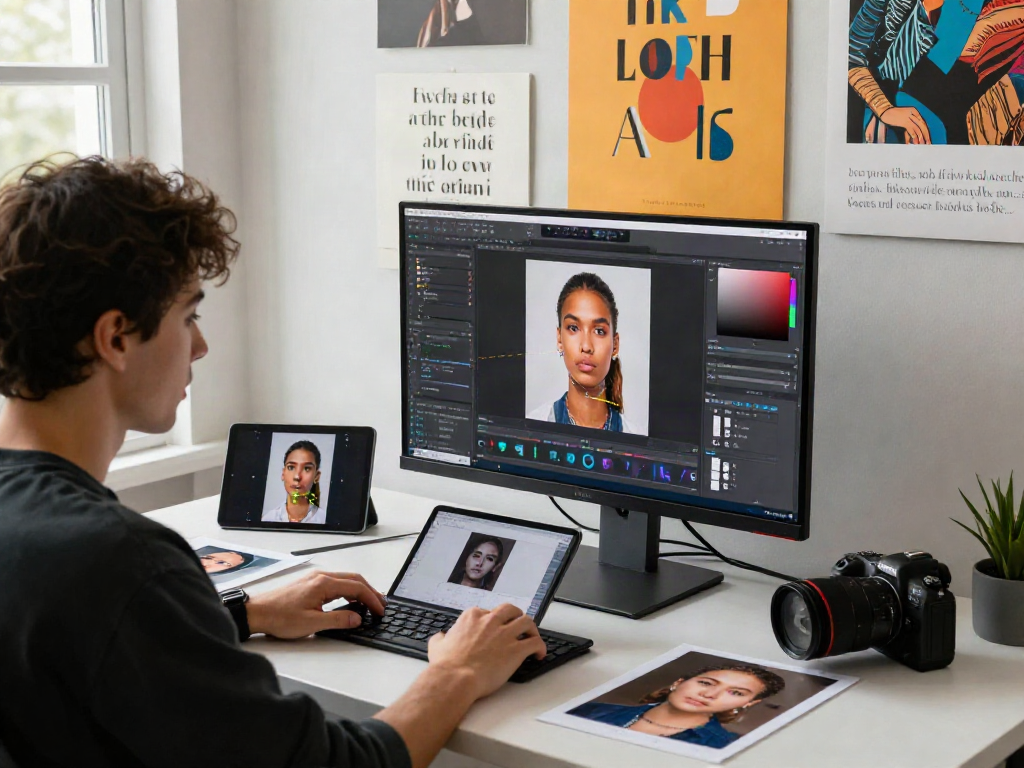
Facial age estimation refers to the process of predicting a person’s age based on various facial characteristics analyzed through algorithms. These tools utilize advanced machine learning models trained on vast datasets of diverse facial images to understand aging patterns. By analyzing features such as wrinkles, skin texture, and facial contours, these applications provide an estimation of biological age.
The Science Behind Age Detection Algorithms
At the heart of age detection algorithms are convolutional neural networks (CNNs), a type of deep learning model particularly effective in image analysis. These networks learn to identify complex features by processing multiple layers of information. By training on labeled datasets, the CNNs can distinguish between various age groups and assign a predicted age to new input images accurately.
How Accurate Are AI Tools in Age Estimation?
The accuracy of AI age estimation tools can vary widely depending on several factors, including the quality of the training data and the conditions of the input image. While some studies suggest high accuracy rates of around 85-90% under controlled circumstances, real-world applications can yield mixed results. Factors such as lighting, facial expressions, and image resolution can significantly influence accuracy. Therefore, it is essential to use these tools as fun approximations rather than definitive assessments.
How to Use Online Age Estimators
Utilizing online age estimators can be a straightforward yet engaging process. When exploring options, how old do i look provides comprehensive insights into age estimation, allowing users to upload photos and instantly receive results. Below is a step-by-step guide for a seamless experience.
Step-by-Step Guide to Uploading Your Photo
- Choose an age estimation tool that appeals to you.
- Access the website and locate the photo upload section.
- Select a clear image of your face, preferably with good lighting.
- Upload the photo and wait for the algorithm to process.
- Review the estimated age and any accompanying analysis.
What to Expect from Age Results?
After processing, most tools will provide an estimated age along with a confidence score or detailed analysis of facial features considered in the estimation. You may also receive insights on how your perceived age compares to your actual age, adding context to the results.
Common Misconceptions About Online Age Guessers
Many people believe these tools provide exact biological ages, but this is a common misconception. Age estimators are approximative and should be viewed as entertainment rather than scientific assessments. Additionally, some users may think that all images will yield the same results, but variations in image quality and facial expressions can lead to differing outcomes.
Comparative Analysis of Popular Age Estimation Tools
Overview of Leading Age Estimation Websites
Several websites and apps dominate the age estimation market, all using varying technologies. Some of the most notable include:
- FaceAge.ai: Known for its user-friendly interface and relatively high accuracy.
- Fotor: Offers a quick and easy age guessing service with no signup required.
- Longevity Germany: Promotes a unique face-age calculator that emphasizes a user’s biological age.
User Reviews and Feedback: Which Tools Perform Best?
User feedback is crucial to understanding which age estimation tools perform best. Many users report varying experiences; while some tools provide surprisingly accurate results, others may not meet expectations. It’s advisable to check out reviews before relying on a specific application.
Privacy and Security: Safe Practices for Using Online Tools
Privacy concerns are paramount when utilizing online tools that require photo uploads. Always verify that the application or website has a robust privacy policy and doesn’t store your photos without consent. Opt for tools that emphasize user privacy and data security.
Improving Your Image for Better Age Estimation
Best Photography Practices for Age Detection
To enhance the accuracy of age estimators, consider these photography tips:
- Use high-resolution images.
- Avoid heavy makeup or digital alterations.
- Capture images in natural lighting for the best results.
How Lighting and Background Affect Age Estimation
Lighting can dramatically alter how features are perceived in a photograph. Soft, diffused lighting tends to be more flattering and can reduce the visibility of imperfections, potentially leading to a younger age estimation. Conversely, harsh lighting can accentuate wrinkles and blemishes.
Editing Photos for Optimal Age Result Accuracy
While some basic editing, such as cropping, is acceptable, avoid altering your facial features or skin tone drastically. Filters that smoothen the skin or change your appearance may lead to skewed results, making the estimations less reliable.
Future Trends in Age Estimation Technology
Innovations in AI and Machine Learning for Age Prediction
The field of facial age estimation is rapidly evolving, with ongoing advancements in AI and machine learning set to enhance accuracy. Future innovations may include more refined datasets that encompass diverse ethnicities and age groups, improving the algorithm's adaptability to different facial structures.
The Role of Social Media in Age Estimation Tools
With the increasing popularity of social media filters that utilize age estimation technology, more users are exposed to these tools. This exposure may lead to heightened interest in understanding biological aging and how it relates to personal and societal perceptions of attractiveness and value.
Predictions for Age Estimation Technologies in 2026
By 2026, we expect to see more integrated age estimation tools within social media platforms and other applications, offering real-time age estimation capabilities. Moreover, as AI technologies improve, the accuracy of these predictions will advance, offering users a more realistic view of perceived age.
What tools are best for testing how old do I look?
When seeking to answer the question of "how old do I look," it’s wise to experiment with several tools. Each has its strengths, from user-friendliness to accuracy. Research and reviews can guide you toward the best options available.
Can age estimation results vary by photo quality?
Yes, the quality of the photo significantly impacts the estimation results. High-quality, well-lit images will yield the most reliable outcomes, while low-resolution or poorly lit images may distort the perceived age.
Are there any age guesser apps available?
Various mobile apps exist for age estimation, including those that utilize AI technology for advanced predictions. Review user ratings and feedback to identify trustworthy applications.
How is my data secured when using these services?
Security measures vary by service, so it’s essential to read privacy policies. Most reputable tools will use encryption and not store your images without consent.
Is facial age estimation accurate for everyone?
Facial age estimation technology may not be equally accurate for all individuals, as genetic factors, lifestyle choices, and even ethnic backgrounds can influence perceived age. Thus, results can vary widely between users.