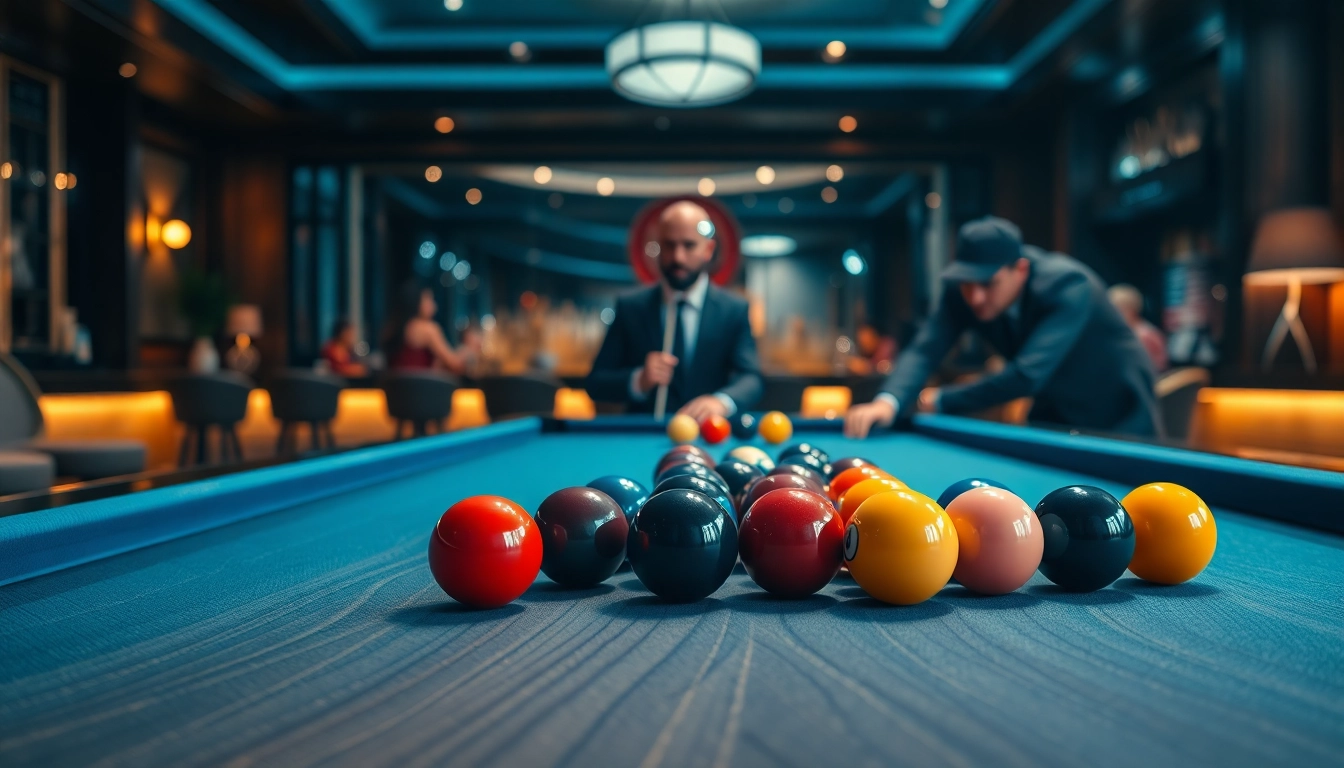
Understanding Billiards: A Deep Dive
History and Evolution of Billiards
Billiards traces its origins back to 15th-century Europe, evolving from lawn games into popular indoor pastimes. Initially played on a flat table with holes and a wooden stick, the game soon transitioned into the more structured game we recognize today. The term “billiards” itself covers various cue sports, with snooker and pool being popular derivatives. Long associated with social clubs and bars, billiards has witnessed shifts in gameplay styles and equipment, becoming a staple in recreational gaming across the globe.
Types of Billiards Games
There are numerous variations of billiards, each with distinctive rules and styles of play. The premier types include:
- English Billiards: A combination of scoring techniques incorporating both potting balls and scoring through cannons.
- Three-Cushion Billiards: A form of carom billiards requiring players to hit their cue ball to contact the two object balls and at least three cushions before scoring.
- Pool: Known for its extensive range of variations (like eight-ball and nine-ball), pool focuses on pocketing balls into designated holes on a table.
- Snooker: Played on a larger table with 21 balls, snooker emphasizes strategy, skill, and precision in potting sequences.
Whether you're a casual player or an aspiring professional, understanding these variations is essential, as it helps in choosing the right game for your skill level and enjoyment.
Essential Billiards Equipment
To embark on your billiards journey, a few essential equipment pieces are required:
- Cue Stick: This is perhaps the most vital equipment; selecting the right cue stick can significantly impact your performance. Look for cues made from quality materials that suit your weight preference.
- Table: The type of table matters, with options ranging from full-sized professional tables to smaller versions suited for home play. Ensure it is well-maintained for optimal gameplay.
- Cue Ball and Object Balls: Typically made from phenolic resin or ivory, these balls come in standardized sizes depending on the game type.
- Chalk: Essential for improving friction between the cue tip and the cue ball, chalk helps prevent miscues during shots.
Investing in quality equipment is critical to your success and enjoyment of the sport. For further information on selecting billiards gear, check out Billiards resources.
Basic Techniques for Billiards
Correct Stance and Grip
Your stance and grip form the foundation of your billiards game. A solid, balanced stance allows for greater stability and control. Position your feet shoulder-width apart for a firm base, ensuring weight is evenly distributed. Grip the cue stick comfortably; a loose grip allows for a smooth stroke without excessive tension.
Aiming Techniques for Success
Aiming requires precision and practice. Techniques such as the 'ghost ball' method help visualize the impact point. Align your body and cue stick toward your intended shot direction, taking time to line up before executing each shot. The right mental practice can significantly enhance your focus and aiming accuracy.
Fundamentals of Cue Ball Control
Mastering cue ball control is pivotal. A skilled player manipulates the cue ball’s spin and trajectory, directing it towards desired targets after making contact. Start by practicing basic shots to understand how different strikes alter the cue ball's path. Focus on the speed and angle of your strikes to develop a fine-tuned control over the game.
Advanced Billiards Strategies
Understanding Spin and English
Spin, often referred to as "English," is an advanced technique that involves striking the cue ball off-center to apply spin. This tactic affects both the movement and behavior of the cue ball after contact with object balls. There are two main types:
- Top Spin: Propels the cue ball forward after it collides with an object ball.
- Back Spin: Pulls the cue ball backward after contact, changing how it interacts with subsequent balls.
Positioning for Next Shots
Effective positioning is key to maintaining control of the game. Always think two to three shots ahead, aiming to leave the cue ball in favorable positions for your next strike. This foresight can dictate the flow of the game.
Psychological Tactics in Competition
Psychological factors can heavily influence performance in any competitive sport, including billiards. Maintaining calm under pressure, for instance, can be a decisive advantage. Visualization techniques, deep breathing exercises, and positive affirmations can enhance focus and minimize distractions.
Common Challenges in Billiards
Overcoming Inaccuracy in Shots
Inaccuracy is a frequent issue faced by players of all levels. To combat this, focus on consistent practice, specifically targeting stance, grip, and angle adjustments. Regularly evaluate your technique and be open to changes to improve your accuracy.
Handling Pressure in Competitions
Performance anxiety can hinder your gameplay in high-stakes situations. Familiarizing yourself with competitive scenarios through practice matches and setting realistic performance goals can help mitigate this stress. Mental preparedness is just as important as physical skills.
Improving Consistency and Focus
To achieve consistent performance in billiards, routine practice is vital. Establish a structured practice schedule emphasizing varied shot techniques and scenarios. Additionally, fostering a focused mindset can improve performance; mindfulness exercises can sharpen concentration levels during play.
FAQs About Billiards
What are the basic rules of billiards?
The fundamental rules include objective targets, turn-taking, and scoring methods. Familiarizing yourself with specific game rules is essential for progression and fair play.
How can I improve my aiming skills in billiards?
Practice a variety of drills, focusing on your stance and stroke technique while visualizing the 'ghost ball' concept to enhance accuracy and consistency.
What equipment do I need to start playing billiards?
Essential equipment includes a quality cue stick, billiards table, cue ball, object balls, and chalk. Consider investing in higher-quality items as you progress.
How does different cue stick types affect gameplay?
Different cue materials, weights, and tip hardness can influence your performance. A well-fitted cue can enhance control and comfort while playing.
What are common mistakes beginners make in billiards?
Common mistakes include poor stance, inconsistent grip pressure, and lack of focus. Regular practice and attention to fundamentals can mitigate these issues.
Contact Information
Call Us: +1 615-624-7821Email: [email protected]Address: 1276 Northwest Broad Street, Murfreesboro, TN 37129, USA